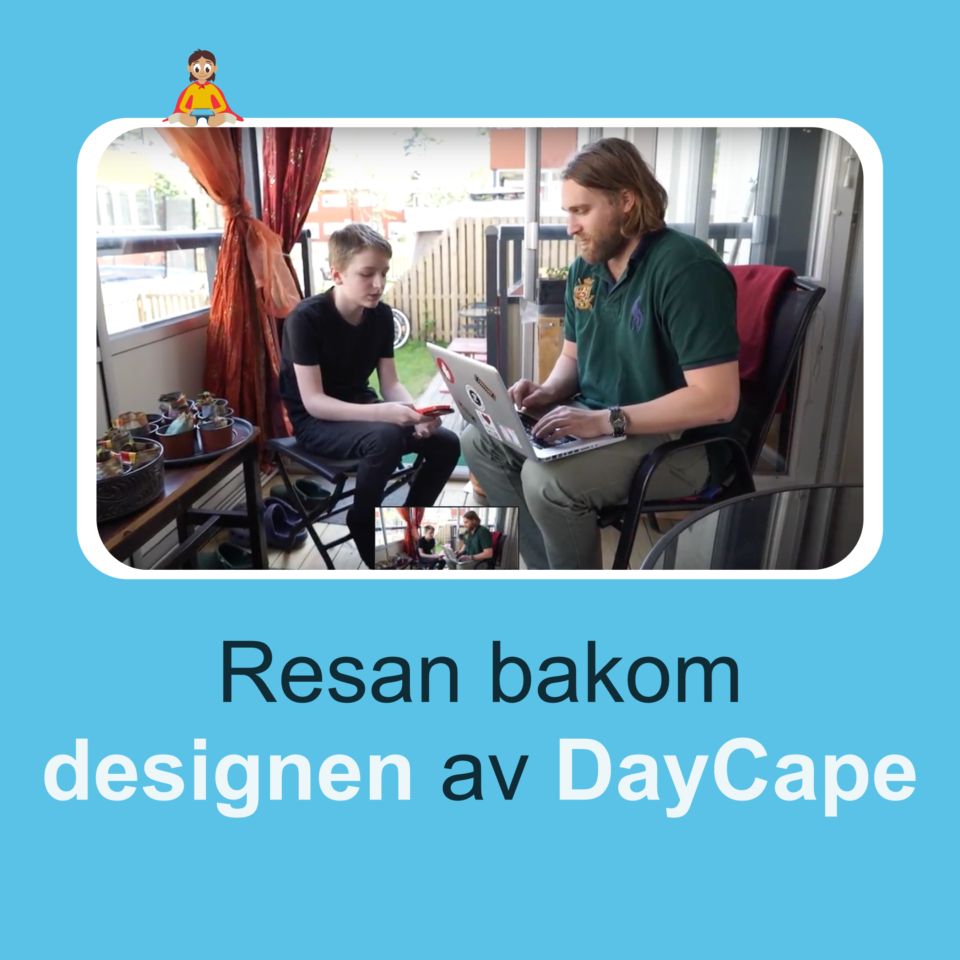
The past few months have been exciting but intense — filled with rapid design sketches, feedback rounds, and ideation around new helpful features for the DayCape app. In recent weeks, I’ve also been sitting down with our talented developers, ironing out the final adjustments and hunting down technical bugs.
Now that many of the new updates are starting to roll out in DayCape, it feels like a good moment to pause and reflect a little on the journey of designing the app.
It all started with a fairly simple question:
Why are all children’s visual schedules stuck on the wall? Wouldn’t it be better to have them along for the ride?
From that question, I’ve spent years talking with hundreds of parents, children, and teachers. Many share stories of how an entire day can fall apart when such an important schedule isn’t accessible.
The initial idea was therefore to create a schedule that is truly accessible and seamless between parents, teachers, and children. A schedule can of course live on a website — but how do you make it child-friendly? How do you strip away the distracting details?
That led us to create a stripped-back child login, alongside a more planning-focused mode for parents and teachers.
When we started testing the app, I also realised there’s a big difference between updating a schedule and actually feeling like everything around the child is working. It comes down to small micro-interactions: Is the child logged in? Is the schedule up to date? How did the activity go? Is everything synced?
Another key insight has been that when designing for productivity and schedules, you can’t lose sight of joy and lightness. This is, after all, an app for children. Why not use colours, playful elements, and fun Cape friends throughout the app?
Ever since we added them, creativity has really taken off. Suddenly there are so many more places where the app can become more expressive. Why should a button be strictly “design-by-the-book” when it can be big, colourful, and fun?
Along the way, I’ve also started questioning something more fundamental:
Is a schedule really that static?
Traditionally, you assign an exact time to an event. But life is messy — things happen, plans change. And that’s actually something quite beautiful.
Sure, sometimes something needs to happen at a specific time. But I’ve started thinking of schedules as dynamic. Events can start, end, and shift throughout the day. What matters isn’t that everything follows the plan perfectly — but that there’s something there to help you when things change.
This autumn, we’ll be releasing several new features that I’ve been thinking about, designing, and losing sleep over for many nights. It feels incredible to finally see them coming to life.
But the journey doesn’t stop there. Life goes on — and there are still plenty of great ideas left to build. 😄